When Software Starts Doing the Work: The New Relationship Between People and AI
As software shifts from passive tool to active participant, teams need clearer roles, stronger review and better ways to learn.
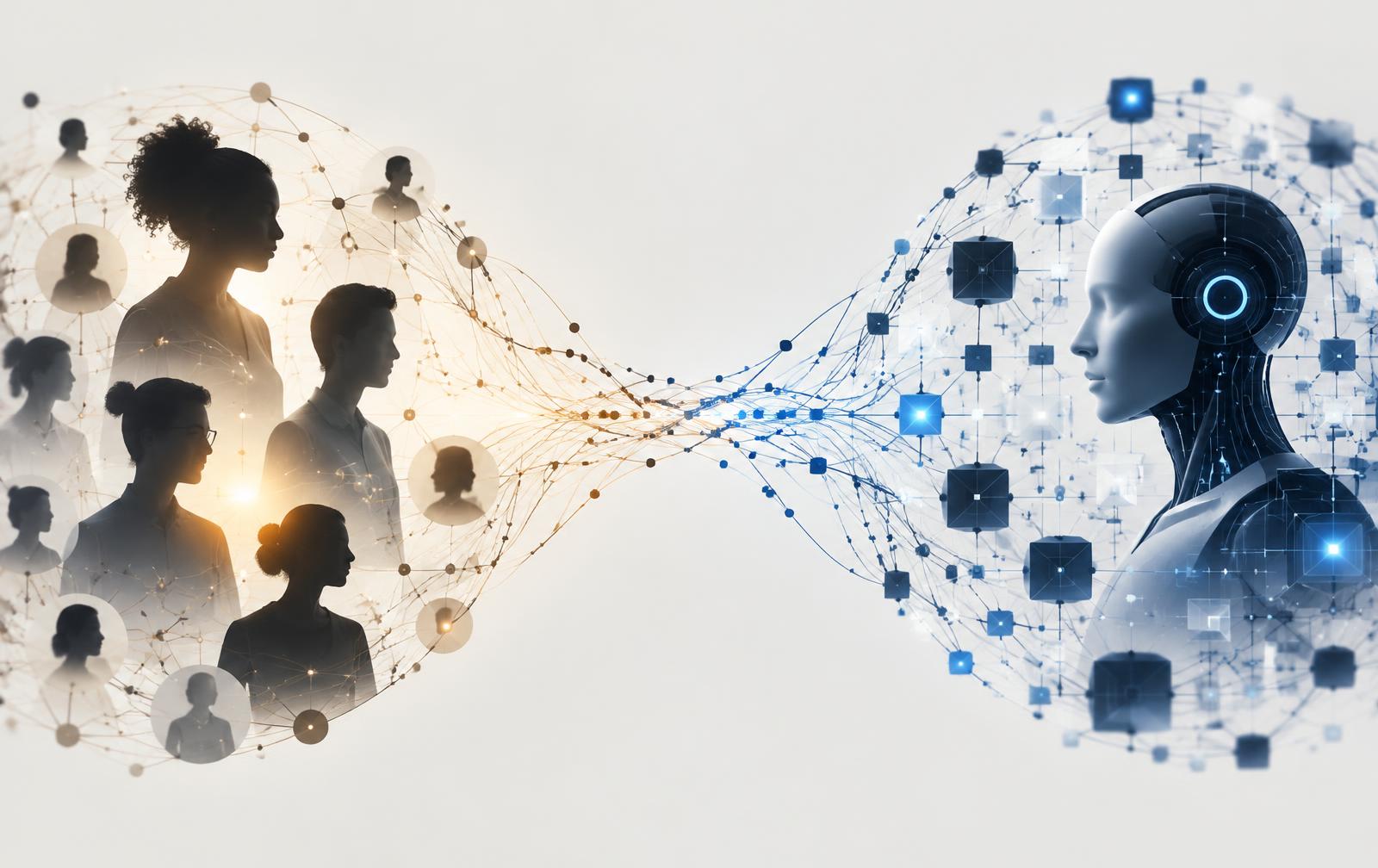
Traditional software waits for instructions. AI-enabled systems can draft, classify, recommend and act across a workflow. That change does not remove the need for people; it changes where their attention and responsibility are most valuable.
Work is being redistributed
When software handles a first draft or monitors a routine queue, people spend less time producing every step manually. Their role moves toward setting intent, supplying context, checking exceptions and improving the process.
This shift can make work more useful, but only when teams are given the time and authority to review what the system produces. Human oversight cannot be a label added after deployment.
New capability requires new discipline
AI literacy is not only knowing how to write a prompt. Teams need to recognise uncertainty, verify sources, protect sensitive information and know when a task should not be delegated.
- Define who approves important outputs.
- Document where information comes from and where it goes.
- Test unusual and high-risk situations, not only ideal examples.
- Create a way to report and correct failures.
Design for partnership, not dependence
The strongest systems make human control understandable. People can see what the software has done, inspect the basis for an output and intervene without breaking the entire workflow.
The future of work will not be defined by tools alone. It will be shaped by organisations that combine useful automation with capable people, clear accountability and a willingness to keep learning.